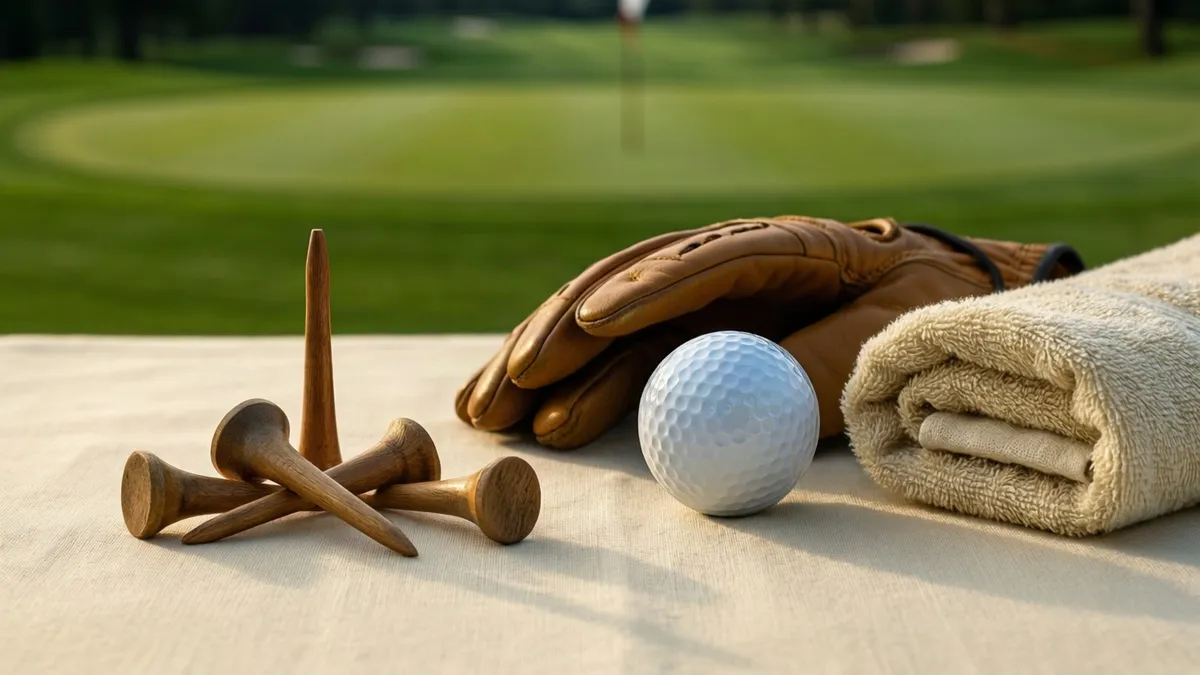
In short: The best golf gifts are the ones that run out — balls, gloves, tees, and towels. Save the fitted equipment and tech for a gift card, because a surprise driver is a coin flip with poor odds. Focus on what the golfer uses every round, not what you hope they'll love.
We write buying guides, not lab reviews: we have not tested every product on this page. Prices, availability and ratings change constantly — whatever Amazon shows when you click is the authoritative figure.
This article contains affiliate links. If you buy through one, we earn a small commission at no extra cost to you. We only recommend what we would suggest to a friend.
The Federal Trade Commission's endorsement guides, 16 CFR Part 255, require a disclosure like that one to be difficult to miss, so it sits above every link here. Our full affiliate disclosure has the rest.
Buying for a golfer is harder than it looks. The bag is full of things chosen for one specific person: shaft flex, loft, grip size, glove hand. Get one wrong and the gift sits in a closet. Our Golf Gifts for People Who Don't Play Golf lays out the same logic for first-time buyers. This guide goes deeper on what to buy, what to skip, and where the money actually lands.
The bag holds two kinds of things. Consumables wear out, get lost, get soaked, and get replaced several times a season. Equipment was chosen for that player, often in a fitting, and replaced almost never. Buy from the first bucket and you almost cannot miss.
The best golf gifts run out first
A golfer loses balls. They wear through gloves. Tees snap. Towels get soaked and stiff.
These things get replaced constantly, which makes them the safest gifts in the sport. Equipment does not work that way. A driver is fitted to a swing speed, a shaft flex, a loft preference, and a grip size. A glove goes on the hand opposite the one they write with, and it needs a size. Get the size wrong and it sits in a drawer.
This is why the best golf gifts are consumables. People choose them for their certainty rather than their excitement. A golfer who receives a dozen premium balls will use them. A golfer who receives a fitted driver they didn't ask for probably won't.
The logic extends further than you'd think. Towels, ball markers, divot tools, headcovers, hats, socks: all of these get used, worn, lost, and replaced. None require knowing a single spec. If you cannot find out the golfer's glove hand or ball preference without spoiling the surprise, buy from this list instead.
Balls, gloves, and tees: the consumable trinity
Three things run out faster than anything else in a golf bag. Balls, gloves, and tees. Start here.
Balls are the safest consumable, but you need one piece of information: what the golfer plays. A premium tour-level ball costs more and plays differently than a distance ball. If you know the brand and model they use, buy a dozen of those. If you don't, a mid-tier ball from a major manufacturer is a safe middle ground. Most golfers will use it, even if it's not their first choice. Search for golf balls on Amazon and filter by the brand you recognize from their bag.
Gloves are trickier. The glove goes on the hand opposite the dominant hand: a right-handed golfer wears it on the left. You also need a size, which runs from small to extra-large and varies by manufacturer. If you can check the old glove without spoiling the surprise, do it. The size is printed on the strap. If you can't, skip the glove and buy the towel instead. Search for golf gloves on Amazon to see the size options.
Tees are the easiest gift in golf. Nobody has too many. They break, they get lost, they get left in the ground. A pack of wooden or plastic tees in mixed lengths costs very little and gets used every single round. Search for golf tees on Amazon and pick any pack with decent volume.
For beginners, the consumable trinity works even better. New golfers lose more balls, wear through gloves faster from grip tension, and go through tees quickly. An experienced golfer may have brand preferences, but a beginner will use whatever you give them.
The towel exception: non-consumables that always work
Some gifts don't run out but still can't be wrong. These are items every golfer uses, every round, regardless of skill or spec.
Towels top the list. A golf towel gets clipped to the bag, used to clean balls and clubs, soaked in rain, and eventually replaced because it smells. Magnetic towels that snap to the cart frame are popular. Cooling towels for summer rounds are a thoughtful touch. You cannot buy the wrong towel. Search for magnetic golf towels on Amazon.
Ball markers and divot tools are the pocket change of golf. They get lost constantly, which makes them perfect gifts. A magnetic ball marker that attaches to a hat clip, or a divot repair tool with a built-in marker, will get used every round. Search for ball markers and divot tools on Amazon.
Headcovers let a golfer express personality without touching performance. A novelty driver cover, a knit fairway wood cover, or a set of iron covers protects clubs from bag clatter. The golfer may already have some, but spares get rotated in and out.
Hats are wearable and safe. A cap with a clean design works on and off the course. The risk is low: one size fits most, and a golfer can never have too many caps. Search for golf hats on Amazon.
Apparel sits slightly higher on the risk scale. Polos, quarter-zips, and hoodies are versatile on and off the course, but sizing varies by brand and the golfer may have strong color preferences. If you know their size, a quarter-zip is the safest apparel bet. It layers over anything and works in almost any weather. Search for golf quarter-zip pullovers on Amazon.
Drinkware rounds out the safe non-consumables. An insulated tumbler that keeps coffee hot on a cold morning round, or a water bottle that fits the cart cup holder, gets used constantly. Flask sets and small coolers appeal to the 19th-hole crowd. None of these require a single spec. Search for insulated golf tumblers on Amazon.
Other safe bets in this category: sunglasses (polarized, one size fits most) and socks (golf-specific with arch support, always needed). Also, consider portable speakers (a small Bluetooth speaker clips to the cart for casual rounds). Personalized items add thoughtfulness without adding risk, because they're decorative versions of things the golfer already uses: a custom ball stamp, a monogrammed towel, an engraved divot tool.
Coin flips: clubs, shafts, and anything fitted
Here is where golf gifts go wrong.
A driver is not a driver. It has a loft, a shaft flex, a weight configuration, a grip size, and a head shape, all chosen for one player's swing. Buying one as a surprise is guessing at five variables you probably can't see.
The same goes for irons, wedges, putters, and shafts. Even grips are fitted: the size and wrap pattern matter. Golf shoes require a size and a width. A rangefinder or GPS watch might duplicate something already in the bag. Training aids assume a specific swing flaw the golfer is working on. A launch monitor or simulator is a major purchase that the golfer should choose for themselves.
Conformity rules add another layer. The United States Golf Association (USGA) adopted additional specifications for grooves and punch marks effective January 1, 2010, per the USGA's Informational Club Database. Clubs that conformed to the rules in effect prior to that date will continue to conform to the Rules of Golf until at least 2024, the same database states. The edge radius requirements effective from January 1, 2010 do not apply to clubs with lofts of less than 25 degrees, the USGA notes.
What does this mean for a gift buyer? If you're buying a used or older club as a gift, you're navigating conformity rules you probably don't understand. A club that doesn't conform could be illegal in tournament play, and the golfer won't know until they're called on it. This is another reason fitted equipment is a coin flip.
Golf bags seem safe but aren't always. A stand bag, a cart bag, and a carry bag are shaped differently for different uses. The golfer's current bag may dictate what fits on their push cart or in their car trunk. If you know the type, a bag can work. If you're guessing, it might not.
Push carts are similar. Practical for walkers, useless for riders, and the golfer may already have one. A nice thought, but confirm first.
Complete club sets are sometimes marketed as gifts for beginners. These can work if the recipient is truly new and has nothing yet. For anyone who already plays, a complete set duplicates what they have and probably doesn't match their swing.
The rule: if it requires a fitting, a size, a spec, or a swing speed, it's a coin flip. Buy the consumable instead, or redirect to a gift card.
The gift card that actually gets used
A gift card feels like giving up. In golf, it's the opposite.
A gift card to the pro shop, the local course, or a fitting service lets the golfer buy exactly what they need, in the right spec, at the right time. Credit toward a fitting session pays for part of a process that most golfers want but won't splurge on for themselves.
For the golfer who has everything, a gift card is the only gift that can't be wrong. They already have the towels, the balls, the headcovers. What they don't have is credit toward the next thing they actually want, and that might be a club, a shaft, or a lesson they've been putting off.
Lessons and instruction are the other version of this. A package of lessons with a teaching professional is a generous gift that most golfers would love but rarely buy for themselves. It doesn't require a spec. It requires knowing the golfer wants to improve, which most do.
Subscriptions work on the same logic. A golf magazine, a streaming instruction service, or a ball-delivery subscription extends the gift beyond a single round and keeps giving through the season.
Books about golf history, architecture, or instruction appeal to golfers who read. Not every golfer does, but the ones who do tend to love them deeply. A well-chosen golf book can outlast every other gift in the bag.
The gift card is not the lazy option. It's the honest one, when the alternative is guessing at specs you can't see.
How much to spend on the best golf gifts
Spending more does not reduce risk in golf gifts. It often increases it.
Under $25 buys tees, ball markers, divot tools, socks, or a towel. These are the safest gifts in the sport. They get used, they get lost, they get replaced. You cannot go wrong.
Under $50 adds a dozen mid-tier balls, a glove (if you know the size), a hat, a headcover, or an insulated tumbler. This is the sweet spot for most casual golf gifts: useful, thoughtful, and low-risk.
$50 to $100 opens up premium balls, apparel, a magnetic towel set, an entry-level rangefinder, or a personalized item. Risk creeps up here because you're spending enough that getting it wrong stings.
$100 to $250 is where you enter coin-flip territory unless you stick to consumables. A premium ball dozen, a high-end quarter-zip, or a curated gift set bundled with balls, towel, tees, and a marker works. A driver, a putter, or a launch monitor at this price is a gamble.
Over $250 should go toward a gift card, a fitting credit, or a lesson package. Spending real money on fitted equipment as a surprise is the most common way to waste it.
Price bands below are ours, not a sourced figure. They reflect editorial judgment about where risk and value intersect for golf gifts.
Consumables vs. coin flips: the comparison
The table below summarizes the risk and reward of each gift category. Risk level, reasoning, and price ranges are our editorial judgment, not sourced figures.
| Category | Risk level | Why it works | Why it might fail | Price range |
|---|---|---|---|---|
| Golf balls | Low | Always needed, always lost | Wrong brand or compression | $15–$50/doz |
| Golf gloves | Medium | Wears out constantly | Wrong hand or size | $15–$30 |
| Golf tees | Very low | Break every round | Hard to get wrong | $5–$15 |
| Golf towels | Very low | Used every round, replaced often | Duplicate of what they have | $15–$35 |
| Ball markers/divot tools | Very low | Lost constantly, always needed | Minimal risk | $10–$25 |
| Headcovers | Low | Express personality, protect clubs | Duplicate of existing covers | $15–$40 |
| Hats | Low | Wearable, one size fits most | Style preference | $20–$40 |
| Apparel (polos, quarter-zips) | Medium | Versatile on and off course | Sizing and color preference | $40–$100 |
| Drinkware | Low | Used every round | Minimal risk | $20–$50 |
| Sunglasses | Low | Practical, one size | Style preference | $25–$150 |
| Socks | Very low | Always needed, wears out | Minimal risk | $15–$25 |
| Portable speakers | Low | Fun for casual rounds | Some courses prohibit | $25–$75 |
| Personalized items | Low | Thoughtful version of consumable | Minimal risk | $15–$50 |
| Golf bags | Medium-high | Practical if type is known | Wrong type for their setup | $100–$250 |
| Push carts | Medium-high | Useful for walkers | May already have one | $100–$200 |
| Golf shoes | High | Always needed | Size, width, style | $75–$200 |
| Rangefinders/tech | High | Useful if they don't have one | May already own one | $150–$400 |
| Training aids | High | Helps specific flaws | Wrong flaw, goes unused | $30–$200 |
| Clubs (drivers, irons) | Very high | The gift every golfer wants | Fitted to a specific swing | $150–$500+ |
| Simulators/launch monitors | Very high | Impressive, exciting | Major purchase, golfer should choose | $500+ |
| Gift cards/lessons | Very low | Can't be wrong | Less personal | $50–$250+ |
Our take: Buy the consumable, not the club. A dozen balls, a towel, and a divot tool will get used this week. A surprise driver will sit in the garage until the golfer can resell it. If you want to spend real money, redirect it to a fitting credit or a lesson package at their course. The only golfer who'd be disappointed with a gift card is one who doesn't play, and you wouldn't be shopping for them.
Decision checklist: what to buy and what to skip
Our suggested version. Copy it, fill it in, and you'll know before you click:
- Does it run out? If yes, buy it. Balls, gloves, tees, towels, socks.
- Does it need a size, hand, or spec? If yes, skip it unless you can confirm. Clubs, shoes, gloves.
- Does the golfer already have one? If it's tech (rangefinder, GPS watch, speaker), assume they might. Ask.
- Is it personal preference? Apparel, hats, sunglasses carry lower risk, but sizing and style still matter.
- Are you spending over $100? Default to a gift card or lesson credit. The risk curve steepens fast above that line.
- Is it for a corporate event? Stick to branded consumables with the company logo. Nothing fitted, nothing personal.
Frequently asked questions
What is the best golf gift under $25?
Tees and ball markers. A pack of mixed-length wooden tees and a magnetic ball marker with a hat clip will cost under $25 together and get used in the very next round. For a single item, a golf towel in the $15 to $25 range is the safest bet. Every golfer needs at least two, and most only have one that isn't stiff and disgusting.
How much should I spend on a golf gift?
Under $50 is the sweet spot for most golf gifts. At that level you can buy a dozen quality balls, a good towel, a hat, or a bundled set of consumables without entering coin-flip territory. Above $100, the risk of getting it wrong grows faster than the appreciation grows, unless you're buying a gift card or lesson credit.
Are golf gift cards better than physical gifts?
For fitted equipment, yes. A gift card to the pro shop or toward a fitting lets the golfer buy the right spec instead of accepting your guess. For consumables, a physical gift is better: a dozen balls in a box feels like a gift, while a $30 digital credit feels like an errand. Match the format to the category.
What golf gifts do professional golfers actually recommend?
Pros consistently point to consumables and training tools over equipment surprises. Balls they actually play, gloves in the right size, alignment sticks for practice, and lesson time with a coach they trust. The common thread is nothing fitted, nothing guessed. A pro would rather receive a pack of their preferred tees than a driver in the wrong loft.
What is the best golf gift for a beginner vs. an expert?
Beginners lose balls fast and go through tees quickly, so volume gifts like a large pack of balls and a bucket of tees land best. A beginner also benefits from a lesson package, since early instruction compounds. Experienced golfers have brand and model preferences for balls and gloves, so you need to match what's in their bag. A premium towel or a personalized divot tool works when you don't know their specs.
Do golf gifts need to be golf-specific?
No. An insulated tumbler, a Bluetooth speaker, a good pair of polarized sunglasses, and a comfortable quarter-zip pullover all work on the course and off it. The best non-golf-specific gifts are things the golfer uses during a round but wouldn't think to buy for themselves. These include a nice water bottle, a cooling towel, or a snack cooler that clips to the cart.
What golf gifts are appropriate for corporate events?
Branded consumables. A sleeve of golf balls, a towel, or a divot tool with the company logo is standard for corporate outings and client gifts. Avoid apparel, since sizing is a nightmare at scale, and skip anything fitted. A boxed set of balls, tees, and a ball marker in a branded sleeve is the safe, professional choice that won't sit unused.
Dan Calloway writes buying guides, not reviews; nothing here was tested by us.
Sources
- United States Golf Association (USGA) — "Informational Club Database" (https://www.usga.org/rules-hub/grooves/informational-club-database.html) "Retrieved 2026-08-23".
- Federal Trade Commission — "Guides Concerning the Use of Endorsements and Testimonials in Advertising" (https://www.ftc.gov/legal-library/browse/federal-register-notices/guides-concerning-use-endorsements-testimonials-advertising) "Retrieved 2026-08-23".