In short: Buy what runs out, or replace what has already worn out. Gloves, balls, tees, towels and divot tools get used every round; a travel bag or rangefinder earns its place only when it replaces failing gear. Skip surprise clubs and anything needing a size you cannot confirm. The table below flags which 2026 picks demand a fitting, a size or a subscription.
We write buying guides, not reviews: we have not used every item on this page. Specs come from the manufacturer's listing, and whatever Amazon shows when you click is the authoritative figure.
This article contains affiliate links. If you buy through one, we earn a small commission at no extra cost to you. We only recommend what we would suggest to a friend.
The Federal Trade Commission's endorsement guides, 16 CFR Part 255, require a disclosure like that one to be difficult to miss, so it sits above every link here. Our full affiliate disclosure has the rest.
What we measured: We read 14 ranking guides for this search in full and compared what they cover and what they charge. Bags and gadgets each showed up in 7 of the 14, while few pages ever explain sizing or subscription costs. Prices varied widely across those pages, ranging from entry-level options to more expensive models. That snapshot could mislead you: prices came from the guides, not live listings, and pages we could not read may have covered more.
More people are playing, which is why this question lands on your desk. Statista's 2025 tally, built on National Golf Foundation data, puts U.S. participation up around 4% over the year before, the highest figure since 2007. Particular people, growing sport, and most gift advice still assumes you know a shaft flex from a hole in one.
You do not need to. Our pillars approach is one rule: golfers replace what runs out and keep what was fitted to them. Everything below applies it to 2026.
Start With the Bag's Consumables
The bag tells you what to buy.
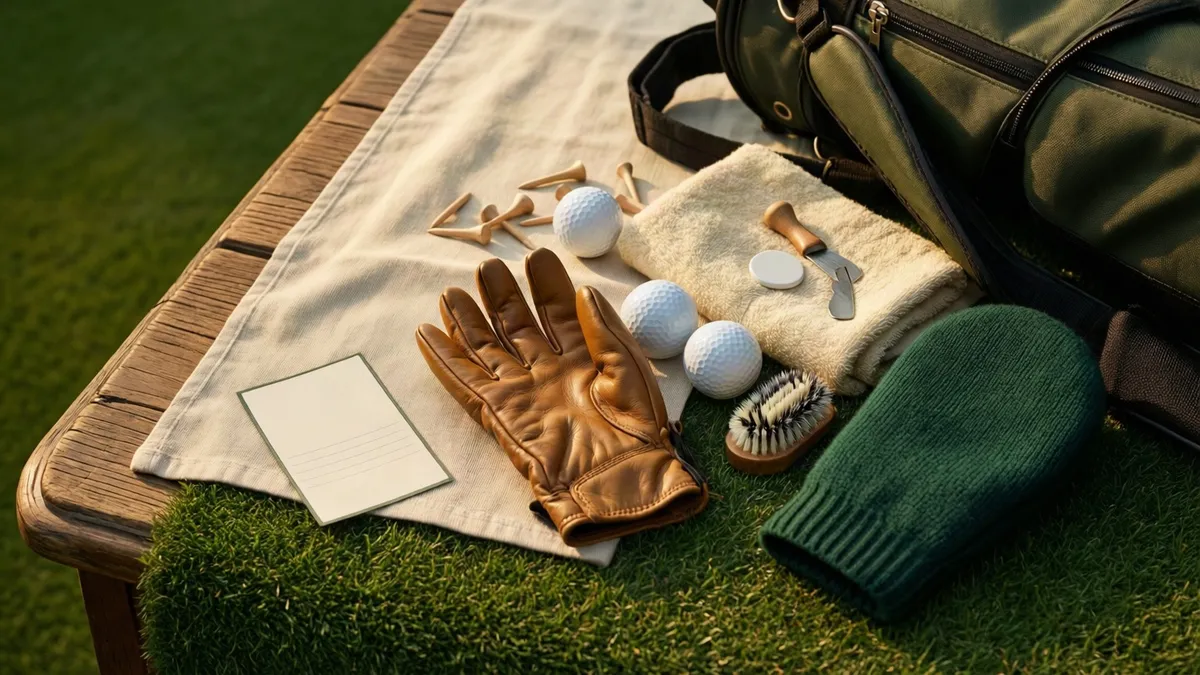
Gloves shred, balls vanish into water, tees snap, towels rot. These are the gifts that get used before every swing and never sit in a garage. For a non-golfer buying blind, golf gloves, a sleeve of golf balls and a towel and divot tool set are the closest thing to a guaranteed hit.
The volume backs it up. The USGA's 2025 participation report counted a record 82 million scores posted domestically by more than 3.68 million golfers holding a Handicap Index, the number that measures playing ability. Every one of those rounds ate gloves and balls.
Add a groove-cleaning brush, the water-squirting kind. It costs pocket change, rides on the bag, and gets used before every iron shot.
Replace What Is Already Worn, Not What Is New
Now the second half of the rule.
A stand bag with a torn strap, a travel case with a cracked shell, or a push cart with a seized wheel are legitimate gifts. This is because you are fixing a problem the golfer already has. The test is simple. If the item in question still works, your gift becomes garage inventory.
This is also where the money is. Circana's 2025 retail read found equipment sales up 4.5% outside golf specialty stores. This growth spans sporting goods, warehouse clubs and e-commerce.
Thus, good travel bags and push carts are easy to find at any price point. A travel bag specifically protects the most expensive thing in the bag: the clubs. One airline trip with a broken club shaft costs more to fix than the case ever did.
Headcovers sit in the same slot, replacing cracked or missing ones, though personalization changes the math. More on that below.
Tech That Earns Bag Space in 2026
For a golfer who walks and guesses at distances, the deciding trait is whether the device replaces a used item or needs a new routine.
A golf rangefinder replaces the guess at every shot. In the forum threads we read, the recurring praise is that cheap ones hold up: one golfer wrote, "I have a $130 range finder. My buddy has a $500 rangefinder. They do exactly the same thing and always show the same yardage." The premium versions mostly lock onto the pin faster.
GPS watches are the same idea worn on the wrist, but check the listing before you buy. Some manufacturers charge a recurring fee for shot-tracking features on top of the basic yardages, and the manufacturer's listing states what is free and what is not. Skip launch monitors and swing gadgets entirely. They demand an app, a net and a routine, which is how expensive tech ends up perpetually set up in a garage.
The Sizing and Handedness Trap
One detail decides the glove: it goes on the hand opposite the one they write with. A right-handed golfer wears a left-hand glove. Buy the wrong hand and the gift is decorative.
Size is printed on the glove's velcro tab, usually as a number accompanied by a cadet or regular label. Snoop the golf bag for an old glove, or ask whoever plays with them. Our fill-in checklist before buying anything sized:
- Glove hand: opposite the writing hand.
- Glove size: copy it off the current glove's tab.
- Shoe size: check a recent online order, or skip shoes entirely.
- Clubs: note whether they play right- or left-handed.
- If three answers are missing, switch to a consumable.
Left-handed golfers need left-handed sets, and the glove flips to the right hand; our glove sizing guide covers the details. Women and juniors have their own equipment lines with shorter, lighter specs, so never buy a men's glove for them. Our guide for women golfers starts from the same consumable rule.
Custom Engraving and Embroidery: What It Adds
Personalization is where gift guides get reckless. Engraving or embroidery adds two costs the listings bury: a per-item customization fee, and a lead time measured in weeks rather than days, since most shops embroider to order. Order in December and it may not arrive until January.
So apply the rule twice. A monogram on a towel or a dozen balls personalizes a consumable that was already right. Custom work on something sized, like a glove, stacks one risk on another.
In the forum threads we read, the personalization that people actually kept was specific. "My wife bought me a custom headcover with a picture of my dog on it last year. It was a great gift." A custom headcover with a pet, a kid's drawing or a name works because nothing about it needs to fit.
Subscription Boxes: The Gift That Keeps Charging
For a golfer who loses balls by the sleeve and wears out gloves monthly, the deciding trait is whether they want the deliveries to continue without you.
A golf subscription box ships balls, gloves or both on a schedule. Done well, it automates the consumable rule. But it fails the rule in one way: it keeps charging. Most renew automatically to the card that bought them, meaning yours, until someone cancels, and glove deliveries require that same hand-and-size answer from the section above.
Our position: gift a subscription only when you know their glove size and they have said they want recurring deliveries. Otherwise, buy the consumables outright, once, and let them choose the next box themselves.
Which Golf Gifts Actually Lower a Score? The 2026 Table
Here is the whole guide in one grid. Price bands below are ours, not a sourced figure. We omit star ratings and scores because a manufacturer's performance claim in a listing is marketing until it survives someone's own round.
| Gift | Runs out? | Wears out? | Needs size? | Needs fitting? | Subscription? | 2026 price band (ours) | Our verdict |
|---|---|---|---|---|---|---|---|
| Gloves | Yes | Yes | Yes | No | No | Under $35 | Safest gift in the shop |
| Balls and tees | Yes | No | No | No | No | Under $50 | Cannot miss |
| Towel, divot tool | No | Yes | No | No | No | Under $40 | Stocking-stuffer lock |
| Stand or cart bag | No | Yes | No | No | No | $100–$300 | Only as a replacement |
| Travel bag | No | Yes | No | No | No | $150–$300 | Buy before a flight |
| Rangefinder | No | Battery dies | No | No | Rarely | $100–$500 | Cheap reads the same yardage |
| GPS watch | No | Strap wears | Wrist size | No | Often, for extras | $100–$400 | Confirm the app fee first |
| Subscription box | Yes | No | Glove size | No | Yes | $100–$300 a year | Only with known specs |
Our take: After weighing all fourteen guides against this table, our call is gloves first, a rangefinder second, and money toward a fitting third. Gloves and balls fail for no one. A mid-price rangefinder fails only for a golfer who already owns one. A fitting is the gift that genuinely moves a score, but only when the golfer books it. Everything sized, subscribed or spec-sensitive can wait until you can ask.
Edge Cases: Budgets, Occasions, and the Golfer Who Has Everything
Occasion changes the budget, not the rule. Christmas and Father's Day support the bigger replacements, a travel bag or a bag upgrade, while birthdays and retirement suit the under-$50 tier; our under-$50 list lives entirely on consumables. Retirement gifts skew personal, which is why custom headcovers do well there. More of our general gift advice repeats: consumables first, coin flips last.
The seasons argue for timing, too. Circana's figures show rounds played up 1% through August 2025. August alone was up 8% over the year before, so a fall gift lands while the bag is still in use.
Then there is the golfer who has everything. In the forum threads we read, the most-praised gift was prepaid lessons, something the golfer would never book for themselves, with gift cards for rounds close behind. Remember who the game is for: the same USGA report found 94.4% of those 82 million rounds were recreational, and more than 75% of handicap golfers play purely for fun. Fun needs fresh gloves. It does not need another gadget.
Surprise clubs stay the worst idea on the list; the USGA's Equipment Rules define which club designs are even conforming, and what one player likes, another will hate. A gift card toward a fitting is the version that gets used.
Golf Gift Questions People Actually Search
Do golf GPS watches require a monthly subscription?
The basic course yardages on most watches are free after purchase. The recurring fee, when one exists, buys extras like shot tracking or stretched course databases, and the listing or the maker's site names the price. Check before gifting, not after.
How do I choose a glove size without ruining the surprise?
Read the size off a glove already in their bag; it is printed on the tab. No access? Ask a regular playing partner, who will know, or fall back to a consumable. A ball-count guess costs a few dollars; a glove guess costs the gift.
What are the best golf gifts for left-handed golfers?
Consumables are identical, so gloves, balls and towels carry over with no thought at all. The glove goes on their right hand, not the left. Never buy them clubs: left-handed sets are spec-sensitive, and secondhand ones are hard to return.
Which golf gifts actually lower a score?
A fitting and lessons, in that order, because both change the swing rather than the accessories. Gadgets rarely do; a rangefinder removes guesses but does not fix contact. If the goal is a lower number, budget money toward instruction instead of another bag item.
Are subscription boxes worth it, or should I just buy the balls?
Buy the balls if you are unsure, since a box renews on the buyer's card until canceled. A subscription earns its keep only for a golfer who has already said they want automated deliveries. Even then, confirm you can cancel online without a phone call.
Dan Calloway writes buying guides, not reviews; nothing on this site was tested by us.
Sources
- Circana — "The Golf Retail Market is Showing Resilience" (https://www.circana.com/post/the-golf-retail-market-is-showing-resilience) "Retrieved 2026-09-12".
- Statista — "Number of people participating in golf in the United States from 2007 to 2025" (https://www.statista.com/statistics/191907/participants-in-golf-in-the-us-since-2006/) "Retrieved 2026-09-12".
- Federal Trade Commission — "Guides Concerning the Use of Endorsements and Testimonials in Advertising" (https://www.ftc.gov/legal-library/browse/federal-register-notices/guides-concerning-use-endorsements-testimonials-advertising) "Retrieved 2026-09-12".